Main

When threatened, sessile plants respond rapidly with metabolic switches and genetic reprogramming to environmental cues5,6,7. Electrical, cytosolic Ca2+ concentration ([Ca2+]cyt) and reactive oxygen species (ROS) signals are among the earliest plant reactions observed with stressors as diverse as wounding, pathogen attack, water and salt stress, and are suggested to be intertwined1,2,3. After pathogen attack or wounding, jasmonic acid (JA) is rapidly synthesized, playing a crucial role in balancing plant growth and defence. In this trade-off scenario, JA and salicylic acid (SA) act antagonistically in the control of immunity and programmed cell death (PCD)8,9. A ROS burst precedes PCD playing a crucial role in pathogen defence10. Conversely, abscisic acid (ABA) governs drought and salt stress by regulating the plant water status when turgor pressure declines. This simplified view of hormonal control is in fact much more complicated. Mutual control of the phytohormones and second messengers involved is challenging to dissect. This optogenetics study aimed to investigate the role of [Ca2+]cyt- and anion-efflux-induced electrical signals in encoding specificity in plant processes by individually triggering them by means of light-gated ion channels.

Microbial rhodopsins are light-sensitive proteins and powerful tools for minimally invasive manipulation of cells by light (optogenetics)11,12. These optogenetic tools have recently been made available for use in plants4,13. ACR1 2.0 triggers defined membrane depolarizations by anion efflux and guides pollen tubes when stimulated locally4 or initiates stomatal closure through depolarization-synchronized anion and cation efflux14. So far, the role of [Ca2+]cyt signals in plants has been studied with loss-of-function approaches of Ca2+-signalling elements or Ca2+-permeable channels15,16. Here we established an approach equivalent to a gain-of-function strategy, a light-gated channel with on–off features allowing defined [Ca2+]cyt modifications.

A light-gated Ca2+-permeable channel

Channelrhodopsins are light-gated cation channels with a broad selectivity for cations17,18. Previously, we engineered a channelrhodopsin variant with extra expression and medium long open time (XXM)19 and pronounced Ca2+ permeability20. Here we screened a set of XXM mutants and identified an extra H134Q substitution in XXM (XXM 1.1) that augments photocurrents and Ca2+ conductance (Fig. 1a–c and Extended Data Fig. 1a–d). Endoplasmic reticulum-export and plasma membrane-targeting signal peptides in XXM 1.2 and XXM 1.3 further improved membrane targeting and photocurrents in Xenopus laevis oocytes, and an N-terminal 11 amino acid truncation in XXM 1.3 led to the final XXM 2.0 version (Fig. 1c and Extended Data Fig. 1a,e).

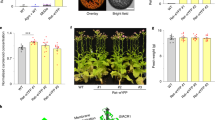
Fig. 1: Functional characterization of XXM 2.0, a channelrhodopsin variant with enhanced Ca2+ conductance.
figure 1

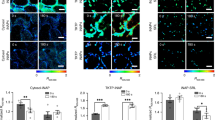
a,b, Blue-light (473 nm, 3 mW mm−2)-activated calcium current (a) and reversal potential (Vr) shift (b) of X.laevis oocytes expressing XXM and XXM 1.1. Error bars show s.e.m., n = 6 (a) and 5 (b) cells of 2 oocyte batches. Significance was determined by two-sided Student’s t-test. ***P ≤ 0.001. c, Blue-light-induced photocurrents of XXM variants in X.laevis oocytes. Error bars show s.e.m., n = 6 cells of 2 oocyte batches. Significance was determined by one-way analysis of variance (ANOVA) followed by a Tukey post hoc test. Different letters indicate significant differences among samples (capital letters: P ≤ 0.01 and lowercase letters: P ≤ 0.05). df, Confocal images of leaf epidermis (d), and mesophyll cell membrane voltage of transgenic Ret-eYFP #1, Ret-XXM 1.2 #1 and Ret-XXM 2.0 #1 (e) and WT (fN.tabacum leaves. Scale bars, 20 μm (d). n = 6 leaves of 2 batches of N.tabacum plants. Green bars indicate green light application (532 nm, 180 μW mm−2). g, Membrane potential changes of WT or transgenic N.tabacum leaves during green light irradiation (532 nm, 180 μW mm−2). Error bars show s.e.m., n = 10, 8, 10 and 10 leaves from 2 batches of N.tabacum plants. One-way ANOVA followed by a Dunnett T3 post hoc test was used to determine significance. h, Aequorin-luminescence recordings in N.benthamiana leaves following green light (520 nm, 50 µW mm−2) illumination. Error bars show s.e.m., n = 9, 7, 8 and 10 leaves from 2 batches of N.benthamiana plants. i, R-GECO1-based [Ca2+]cyt changes in N.benthamiana mesophyll cells transiently expressing the denoted constructs following local green light (532 nm, 180 µW mm−2) illumination. Error bars show s.e.m., n = 16, 25 leaves from 5 batches of N.benthamiana plants. Scale bars, 50 μm.

Source Data

XXM 2.0 was cloned into a plant expression vector providing for in planta production of all-trans retinal, the essential chromophore of rhodopsin4 (Extended Data Fig. 1a). Retinal synthesis did not affect carotenoid content or plant growth under non-stimulating red light conditions when compared to wild-type (WT) plants (Extended Data Fig. 2a–f). The broad XXM 2.0 action spectrum (Extended Data Fig. 1f) permits green light stimulation, minimizing interference with plant photoreceptor signalling21,22. Compared to Ret-XXM 1.2 or 1.3, Ret-XXM 2.0 exhibited improved plasma membrane targeting and stronger membrane depolarizations when stimulated with green light (Fig. 1d–g and Extended Data Fig. 2g–i). This probably resulted from pronounced cation influx and Ca2+-dependent alteration of endogenous ion transport23. No notable light response was induced in WT or control plants expressing the retinal-producing enzyme and soluble enhanced yellow fluorescent protein (Ret-eYFP; Fig. 1e–g and Extended Data Fig. 1a).

In contrast to Ret-eYFP or Ret-ACR1 2.0, Ret-XXM 2.0 elicited a substantial increase in [Ca2+]cyt in Nicotiana benthamiana leaves expressing the aequorin Ca2+ sensor24 (Fig. 1h). Using the red fluorescent Ca2+ sensor R-GECO125 and the pH reporter pHuji26, we observed sustained [Ca2+]cyt elevations but only minor, short-lived pH deflections with Ret-XXM 2.0 at cellular resolution (Fig. 1i, Extended Data Fig. 3a,b and Supplementary Video 1). Simultaneous electrical recordings and [Ca2+]cyt imaging revealed that light-induced Ret-XXM 2.0-dependent [Ca2+]cyt signals were accompanied by reproducible membrane depolarizations and both could be fine-tuned by light intensity or duration (Extended Data Fig. 3c–i). Ret-ACR1 2.0 triggered membrane depolarizations too, but no sustained [Ca2+]cyt increases (Extended Data Fig. 4a). For physiological investigations we finally developed a global light-application protocol (520 nm, 9 µW mm−2) to induce membrane depolarizations or Ca2+ influx in plant leaf cells stably expressing Ret-ACR1 2.0 or Ret-XXM 2.0 (hereafter referred to as ACR1 and XXM; Fig. 2a,b and Extended Data Fig. 4b).

Fig. 2: Distinct plant stress responses induced by ACR1 2.0 and XXM 2.0 stimulation.
figure 2

a, Mesophyll cell depolarization induced by 60 s global green light illumination (520 nm, 9 µW mm−2) in WT, a transgenic Ret-eYFP line or in two Ret-ACR1 2.0 and two Ret-XXM 2.0 transgene plant lines. Error bars show s.e.m., n = 6 leaves of 2 batches of N.tabacum plant. One-way ANOVA followed by a Dunnett T3 post hoc test was used to determine significance. b, Mean R-GECO1 fluorescence change in transgenic N.tabacum mesophyll cells following global green light illumination (green bar). Error bars show s.e.m., n = 8 and 7 leaves from 2 batches of N.tabacum plants. c, Phenotypes of transgenic N.tabacum leaves after 24 h global green light treatment. Scale bars, 5 cm. n = 6 leaves of 2 batches of N.tabacum plants. d, Relative ion leakage from leaf tissue at different time points following global green light treatment. Error bars show s.e.m., n = 6 leaves from 2 batches of N.tabacum plants. e, ROS detection in N.tabacum leaves by diaminobenzidine staining. N.tabacum leaves were collected at indicated time points after global green light illumination. Scale bar, 5 cm. n = 5 leaves from 2 batches of N.tabacum plants. f, Simultaneous amperometric quantification of hydrogen peroxide (H2O2) dynamics and membrane potential (Vm) in transgenic N.tabacum leaves following global green light illumination. Error bars show s.e.m., n = 7, 8 and 10 leaves from 2 batches of N.tabacum plants.

Source Data

XXM and ACR1 elicit distinct phenotypes

When exposed to continuous global low-intensity green light illumination, XXM plants developed necrotic spots after 24 h (Fig. 2c and Extended Data Fig. 5a,b). In support of a pathogen-associated PCD27 response governed by Ca2+ signalling, the necrotic phenotype was suppressed by chelating extracellular Ca2+ (Extended Data Fig. 5c,d). A nonlinear increase in apoplastic conductivity further indicated that PCD develops about 4–8 h after XXM activation (Fig. 2d). By contrast, ACR1 triggered steady anion release from mesophyll cells, resulting in a linear increase in ion leakage towards the apoplast and plant wilting after 4 h continuous low-intensity green light illumination (Fig. 2c,d and Extended Data Figs. 5e–j and 6a). The rapid recovery of leaf turgor within 20 min after ACR1 shut-off (Supplementary Video 2) supports the idea that the wilting phenotype results from reversible leaf cell water loss initiated by ACR1-driven anion efflux and concomitant potassium release through depolarization-activated K+ channels14.

Watering plants with 35% polyethylene glycol 6000 (PEG) mimicked the wilting time course observed in ACR1 plants (Extended Data Fig. 5e–j) and provided suitable experimental conditions for analysing ACR1 responses in a physiological context. Similarly, infection with Pseudomonas syringae pv. tomato strain DC3000 (Pst) was utilized as a suitable physiological control, reproducing the phenotypic characteristics observed with XXM (Extended Data Fig. 5a,b).

Nicotiana tabacum leaves inoculated with Pst triggered robust [Ca2+]cyt increases (Extended Data Fig. 6b,c). As Ca2+-dependent ROS production is key for plant immunity and abiotic stress signalling10,28,29, we monitored ROS production. We observed strong and progressive ROS generation in leaves 4 h after XXM stimulation as well as Pst inoculation. ROS production, however, was significantly lower in leaves of ACR1 or PEG-treated plants compared to XXM leaves and was barely detectable in control leaves (Fig. 2e and Extended Data Fig. 6d–g). In vivo quantitative real-time amperometric H2O2 measurements revealed a rapid H2O2 transient, reaching peak values of 15 µM within 4 min following light stimulation in XXM leaves, that levelled down to sustained steady-state values of 4–5 µM and returned to control levels upon light off (Fig. 2f and Extended Data Fig. 6f). The H2O2 signal lagging about 1 min behind the XXM-induced [Ca2+]cyt increase and depolarization (Extended Data Fig. 6h–j) supports voltage- or Ca2+-dependent ROS production. Despite comparable amplitudes of electrical signals triggered by both optotools, ACR1 provoked only a small ROS rise of about 1 µM after 1 h stimulation (Extended Data Fig. 6f). Thus, our data support Ca2+-dependent profound H2O2 production in plants30.

Metabolic rearrangement by XXM and ACR1

The observed phenotypes indicated that XXM and ACR1 address signalling pathways related to immune responses and osmotic stress, respectively. The phytohormone ABA is central to drought adaptation whereas the interplay of JA isoleucine (JA-Ile) and SA orchestrates defence signalling pathways29,31. In general, JA is rapidly synthesized through its intermediate cis-(+)-12-oxo phytodienoic acid (OPDA) and is subsequently conjugated with L-isoleucine to its active variant JA-Ile30,32. In this context, OPDA is discussed as a signalling molecule that regulates diverse biological processes in a JA-independent manner33,34.

We used a targeted metabolomic approach to quantify the aforementioned marker metabolites. After 1 h, 4 h and 24 h green light treatment, ABA and proline levels increased strongly in ACR1 and PEG-treated control plants, whereas no significant changes were detected in XXM stimulated plants and Pst-treated plants or red light control plants (Fig. 3a–d and Extended Data Fig. 7a–c). OPDA, JA, JA-Ile and SA remained at low levels in PEG-treated plants or ACR1 stimulated plants and remained at basal levels under control conditions (Fig. 3e–l and Extended Data Fig. 7d–o). By contrast, in XXM plants JA-Ile, JA and OPDA strongly accumulated already after 1 h, returning to control levels within 4 h. In comparison, the onset of the SA transient was delayed and returned to basal levels after about 24 h (Fig. 3f–h,j–l and Extended Data Fig. 7i–k,m–o). Following Pst leaf inoculation, levels of JA-Ile, JA and OPDA were comparable to those of control plants, whereas SA levels increased significantly but less than with XXM stimulation (Fig. 3e,i–l and Extended Data Fig. 7h,l). These data corroborate the phenotypes as well as the kinetics of ROS generation and ion leakage (Extended Data Figs. 5a,b and 6a,d,e). In conclusion, spray inoculation and optotool activation seem to act on different timescales. The slow, successive Pst infection process35,36 contrasts with the immediate impact of XXM stimulation, which affects all leaf cells simultaneously. This difference is evident in the unchanged SA levels observed 2 h after Pst infection, compared to the tenfold increase in SA levels observed at the same time point following XXM stimulation (Fig. 3i versus Fig. 3j inset). The minor transient increase of JA-Ile and JA observed after control spray inoculation probably resulted from mechanical cues37. However, the possibility of a rapid, transient increase in JA-Ile and its precursors being missed during Pst treatment cannot be excluded. Overall, our results probably indicate that the two different optogenetic tools addressed distinct metabolic pathways in leaves.