Introduction

Noise remains a great source of discomfort to many in dense cities with rapid redevelopment. While the thick wall of a house provides great noise insulation, openings for ventilation and views such as windows and doors allow entry of urban noises1. Traditionally, thick and porous absorbers such as foams and rockwools would work sufficiently to absorb noises inside the house, but they are opaque, and risk being soaked up if exposed to rainwater. In addition, urban noise sources like fans, machines, construction, mass transport and speech are concentrated in the lower but wide frequency range of 50-2500 Hz2,3, in comparison to human perceptible sound frequency range of 20-20000 Hz. In addition, high-frequency noises attenuate rapidly with distance travelled. Therefore, increasingly noise barriers that can absorb a wide range of low-frequency noises are becoming more desirable. However, until today, most outdoor acoustic absorbers are designed for a fixed and narrow acoustic frequency bandwidth, often only reducing noises around ±50 Hz range about a peak frequency4.

Recently advances in sound-absorbing materials, acoustic metamaterials along with coupled resonant systems have made it possible to achieve high-efficiency and relatively broadband sound absorption using thinner structures at deep-subwavelength scales5,6. Some were even designed for multifunctional situations like periodic resonators7,8,9, sonic crystals10,11,12, and resonant membrane absorbers were widely employed with the aim to make thin transparent absorbers13,14,15,16,17 for windows applications. Among them, membrane-type absorber absorbs the noise in the low to middle-frequency range, eliminating the need for very thick, porous absorbers. Special designs of resonant absorbers have also been developed to simultaneously absorb sound and allow air circulation for ventilation18,19,20,21. However, most of these absorbers still had a narrow absorption band tied to a fixed resonant frequency22,23,24. Tunable membrane absorbers were developed using a pre-stretched dielectric elastomer actuator (DEA)25,26,27,28. A high voltage activation of the DEA reduced the membrane tension (by applying the Maxwell stress29 and thus lowered the absorber’s resonant frequency)26,30. Despite this active adaptive property, such an absorber is ineffective for relatively broader real-world noise.

On the other hand, recently developed microperforated panel (MPP) and micro-slotted panels (MSP) absorbers31,32,33,34, obtain a broader band of sound absorption. Yet, its sound absorption capability is usually insufficient for a general-purpose absorber. For instance, common MPP with an orifice diameter in the range of 0.5–1.0 mm can achieve a half absorption (i.e., the sound absorption coefficient > 0.5) bandwidth of one to two octaves. Both the bandwidth and the half-absorption performance are lagging to compete with the porous absorbers. A tunable MPP or MSP based on reconfiguring the dimensional characteristics of these panels is an investigated solution. The MPP and MSP consist of a rigid panel with submillimeter perforations (holes) or slots and a back cavity. Its resonant frequency depends on the hole sizes (i.e., diameter and depth) and the back-cavity volume31,35,36. Studies have used screw adjustment35 or a stepper motor37,38 to change the back-cavity volume of the MPP absorber. These cavity tuning methods are however impractical and costly for large-area MPP. Recently, an electrically tunable acoustic absorber based on a micro-perforated dielectric elastomer actuator was demonstrated39,40,41,42. These devices have a broader band attenuation of low-to-medium frequency sound and in addition, are capable of electrically tuning the peak absorption frequency and bandwidth. This is achieved by voltage activation that reduces the membrane tension and thus hole size. However, these devices can only survive for a few months as the stretched elastomer membrane with holes ruptures due to the creep of the pre-tensioned viscoelastic elastomer in a short period of time, making them impractical for real applications.

Plants are natural sound absorbers, and they could inspire us to develop an absorber that meets the current need for acoustics attenuation. It is well known that dense tree leaves can absorb noises43, such that trees are planted as visually appealing landscapes along housing estates beside busy roads to isolate traffic noise. Besides leaves, soft flower petals are thought to provide sound absorption by local resonance at low frequencies and create band gaps in the sound transmission frequency spectrum44. Based on simulations of fully blossomed rose flowers, Chen et al.44 proposed that arrays of millimetre-sized flower-like acoustic metamaterial unit cells could increase band gaps by 3 times in the low-frequency region below 400 Hz, compared to unit cells without the petal. The unit cell consists of a 3.2 mm-radius hard tungsten hemisphere encircled by a 1.5mm-high, 0.5mm-thick petal-shaped silicone rubber and is supported by a silicone rubber back plate with a back cavity. They find that band gaps are increased by larger hemisphere radius and thicker but smaller back support plates. This suggests that the larger and thin petals can reduce noise in wider bandwidth. In addition, there are plants that can demonstrate nastic motion in response to external stimuli, like thigmonastic movements in Dionaea, Utricularia, Aldrovanda, Drosera and Mimosa45. Some flowers also respond to stimuli like light, temperature and endogenous rhythms by blooming and closing46,47.

This work seeks inspiration from the shape and blooming motion of flower petals to make a flowers-shaped acoustic absorber that can efficiently absorb sound and simultaneously adapt to variations in the frequency of sound by changing its shape. The petal-like features of the absorber can aid in absorbing sound and the ability to curl and uncurl petals like booming flowers allows it to target the desired frequency of sound. This petals-inspired acoustic absorber consists of an acoustic resonator made of a front micro-slotted panel (MSP) and a parallel-arranged variable-depth (VD) back-cavity with the add-on of biomimetic dielectric elastomer petals in between. The dielectric elastomer petals are made of a micro-slotted dielectric elastomer bending actuator (MSDEBA) whose individual petals work like a DEA unimorph48,49 and are the actively reconfigurable component that mimics the blooming motion of flower petals. The MSDEBA consists of a multi-layered dielectric elastomer actuator with one non-stretchable and flexible Polyethylene terephthalate (PET) layer making them a multilayered DEA unimorph50,51,52. As shown in Fig. 1, the opening of dielectric elastomer petals upon high voltage activation will expose a larger area of MSP whereas its closing will cover the MSP. This allows tuning of the effective hole or open ratio of the MSP and thus tunes the resonant frequency. The increase in open ratio due to voltage-induced bending of dielectric elastomer petals causes shifting of the acoustic absorption spectrum to a higher frequency. This voltage-controllable shifting of the absorption spectrum helps the absorber to adapt to variations in noise frequency in real time and ensures optimal absorption. Unlike micro-perforated dielectric elastomer actuators, in the MSDEBA the elastomer is stretch-free and bonded to stiff and non-stretchable PET membranes eliminating the possibility of creep and rupture. In addition, fabricating micro-slots and modifying the micro-slot dimensions to address different frequency ranges is much simpler and more scalable compared to micro-perforations.

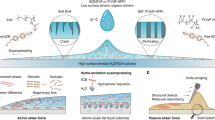
Fig. 1: Bioinspiration and working principle of micro-slotted dielectric elastomer bending actuator (MSDEBA)-based transparent tunable acoustic absorber.
figure 1

a Opening and b closing of flower petals as a response to light or heat stimulus and a physics behind the petal’s bending motion; Analogous working principle of a MSDEBA which works like the petals through differential expansion of one side relative to the other, but the stimulus here is variation in sound frequency and is driven by high voltage. Isometric and side cross-sectional view of a unit cell of MSDEBA (c) at inactive state. d At activated states. e Exploded view of micro-slotted panel (MSP)/MSDEBA/Back-cavity components of the tunable acoustic absorber. f Photo of a real tunable acoustic absorber device.

Results and discussion

Petal-shape DEA opening with large bending

Most flowers open and close upon the right type of stimulation. Changes in light, temperature, humidity, or even endogenous rhythms trigger the blooming and closing of flowers. Flowers of the daisy family open when exposed to light and close with darkness (see Fig. 1a, b). In crocus or tulip, the increasing temperature at sunrise triggers the flower to open wide. As the daylight wanes and the temperature drops the petals close. Usually, petal movements are due to a difference in the expansion rate and/or growth of the two sides of the petals over a short or long period. When the inner surface of the petal rapidly grows or expands in length while the outer surface does not, it causes opening (see Fig. 1b). Similarly, when the more rapid growth of the outer surface occurs it causes closing of the flower (see Fig. 1a)46,47. Such differential expansion between bonded layers can cause the bending of large-area sheets. Inspired by petal movement, we have devised a multilayer MSDEBA system with each unit consisting of four petal-like segments. Each of these dielectric elastomer petals is a transparent piece of unimorph in a triangular shape. For simplicity of fabrication, overlapping between dielectric elastomer petals is avoided, and dielectric elastomer petals are separated by a micro-slit of 0.36 mm width using a 2D laser cutting machine. Each unit of MSDEBA is similar to a flower/pinecone and is a square of 40 mm in length, while the triangular-shaped quadrants are free and behave like petals53,54,55. Each triangle-shaped unimorph consists of multi-layered DEA resting on a flexible PET substrate. The multilayered DEA consists of three soft VHB layers each of 250 µm thickness and the PET is 25 µm thick. The multilayered DEAs with thinner elastomer layers were used instead of a single elastomer layer of the same total thickness to reduce the needed applied high-voltage for the DEA. The outer two VHB layer is sandwiched between the transparent PEDOT:PSS/AgNW electrode layers forming a transparent DEA. A high voltage activation of the dielectric elastomer petals results in areal expansion of the dielectric elastomer layers which is constrained by a non-stretchable PET layer. Consequently, like in petals, the expansion stress is converted to bending stress. This results in saddle bending with the PET surface as the concave side. Consequently, the saddle bending of triangular MSDEBA quadrants or dielectric elastomer petals leaves a larger gap between the adjacent quadrants mimicking an opening motion (see Fig. 1c, d). The front view and the side view videos of the MSDEBA’s opening motion are presented in Supplementary Video 1 and 2 respectively.

Design and bending model of MSDEBA absorber

The MSDEBA absorber module is a box of 200 mm in length and 200 mm in breadth with a thickness of 50 mm. Figure 1e, f shows the acoustic absorber module which consists of a front micro-slotted panel (MSP), a second MSDEBA layer and a parallelly arranged varying depth back cavity. The 200 mm square MSP/MSDEBA layer faces the noise source. The MSP panel consists of a 1 mm thick acrylic plate with 400 micro-slots of 28.28 mm length and 0.35 mm width distributed uniformly with a 2.5 mm spacing. Each MSDEBA module consists of 25 unit-MSDEBAs, arranged in five rows and columns. Figure 1c shows a unit-MSDEBA that has a diagonally cut micro-slot of 42 mm lengths. It is assembled to be in direct contact with the MSP with the outer facing mylar film side. At the inactive state, the overlapping MSDEBA blocks the micro-slot of the MSP except for the central overlapping holes. The bending of the MSDEBA quadrants or the dielectric elastomer petals upon high voltage activation (refer to Supplementary Video 3) increases the open ratio of the MSP (refer to Supplementary Video 1) and alters the acoustic properties of this absorber.

Figure 2 shows upon activation, the multi-layered MSDEBA bends like a composite unimorph with two distinct layer stiffnesses. It consists of the stiff mylar layer of thickness t1 = 25 µm and an equivalent soft layer with a thickness of 750 µm made of the 3 stacks of soft elastomer layers (VHB) each of thickness t2 = 250 µm. The VHB layers make the DEA. Each MSDEBA unit consists of four dielectric elastomer petals which are triangular-shaped dielectric elastomer bending actuators separated by the slit of width d = 0.36mm. The two perpendicular edges of each triangular segment are free while the third edge is completely constrained. Hence, as shown in Fig. 2a, b, they behave like a rectangular unimorph since they are similar to a triangular section extracted from the rectangular section with one constrained edge. When it is activated with a voltage V, the intended unidirectional actuation strain (Δ𝐿𝐿𝑜) of the DEA is given by,

Δ𝐿𝐿𝑜=𝜈𝜖𝜖𝑜𝐸2(𝑉𝑡)2
(1)

where, t is the thickness of the individual layers of the VHB substrate, ν is the Poisson ratio, 𝜖𝑜 is the dielectric constant, and 𝐸2 is Young’s modulus of the VHB substrate. Since the stiff mylar layer and the VHB layer are bonded, the induced in-plane stress causes the system to bend like the bimetallic unimorph as described by Timoshenko et al.56 (see Fig. 2c). The radius of curvature of such a bending system (see Fig. 2c) is given by Timoshenko et al.56,57 as,

1𝑅=Δ𝐿𝐿𝑜(1𝑡1+𝑡22+2𝑡1+𝑡2(1𝐸1𝑡1+1𝐸2𝑡2)(𝐸1𝑡13+𝐸2𝑡2312))
(2)
Fig. 2: Electromechanical model of micro-slotted dielectric elastomer bending actuators (MSDEBAs).
figure 2

One-quarter of the symmetrical unit (in blue) showing is just an extraction of the rectangular unimorph at: (a) inactive state; (b) activated states; (c) f–f’ cross-sectional side view of the bilayer unimorph. (note: L is the height of the triangular petal assuming fixed side as the base, R is the radius of curvature of the activated petal, d is the slit-width, E1, v1 and t1 are the Elastic modulus, Poisson’s ratio and thickness of dielectric elastomer; E2, v2 and t2 are the same for Polyethylene terephthalate (PET) films).

The acoustic property of the MSDEBA absorbers depends on the open ratio and the micro-slot gaps (G). Supplementary Note 2 shows a detailed Electromechanical model of the MSDEBA based on geometrical model of the micro-slots of MSDEBA shown in Supplementary Fig. 2d–f. Figure 2a, b shows that at the inactive state, the MSDEBA segments lie flat with a constant slit gap (d). Meanwhile, at the activated states, the MSDEBA bends, and it obtains a shape like a triangle wrapped around a cylinder of radius R. Due to the unique design of MSDEBA, the slit-gap increases but is not constant from the corner to the centre of the MSDEBA. The gap between the adjacent free tips of the MSDEBA unit is derived to be,

𝐺𝑥=0=𝑑+2{𝐿𝑑2𝑅sin(𝐿𝑑2𝑅)}
(3)

Here L is the half-length of the square formed by the ends of the cross-shaped micro-slots in each unit of MSDEBA. The projected open area of each unit of MSDEBA at the inactive state Av=0 is equal to 22𝐿𝑑. The total projected open area Av at the activated state is given by,

𝐴𝑣=22𝐿𝑑+8{(𝐿𝑑/2)22𝑅2+𝑅2cos(𝐿𝑑2𝑅)}
(4)

Then the voltage-dependent projected open ratio (𝜙(𝑉)) is given by Av/b2, where b2 is the area of the square MSDEBA units. This model was validated by FEM simulation and experiments.

Electrical activation performance

The reported opening motion of reconfigurable MSDEBA-based acoustic absorber upon high voltage activation is validated through analytical models, FEM simulation, and experiments. Figure 3 shows the petal motion-like bending actuation of the four dielectric elastomer petals of an MSDEBA unit which increases the open ratio of the absorber. At inactive state, all dielectric elastomer petals are flat, thus the MSDEBA layer covers most of the parallel micro-slots in the acrylic MSP. The gap between the adjacent tips and the constant slit-width of the MSDEBA units is 0.36 µm. Hence, the calculated open area per unit MSDEBA is 32.5 mm2 and the overall open ratio is 2%. As the voltage applied to the MSDEBA is increased, the dielectric elastomer petals start to bend (see Fig. 3a). This bending causes the dielectric elastomer petals’ free tips at the centre of the MSDEBA to move apart leading to an increase in the projected open area and thus increasing the open ratio of the absorber. Experimental results of multiple specimens show that at a voltage of 5 kV, the triangular segment of the dielectric elastomer petals bend making a radius of curvature of 12.14 mm. Consequently, the adjacent tips move apart by 7.13 ± 1.33 mm and the open ratio of the MSDEBA layer increases to 14.07%. Figure 3b–e shows that these experimental results closely match the presented analytical bending model and the FEA simulation (also refer to Supplementary Video 4 that shows simulated opening of a MSDEBA unit). As shown in Fig. 3f, the current leaking through the MSDEBA at 5 kV activation is 13.62 µA. Hence at the most power-consuming state, the absorber will consume 1.70 watts/m2. Deactivation allows the MSDEBA segments to reach their original flat state. This device has a response time of ~12 s to reach 90% of its final activated state and approximately a second to reach its flat deactivated state. The non-linear viscoelastic nature of acrylic elastomer used in the MSDEBA is the main cause for the viscoelastic drift that slows the response speed during activation58,59. In addition, such viscoelastic elastomer shows significant hysteresis (strain vs electric field), especially at a low frequency that causes variation in the relaxation time. This effect resulted in a variation in the response speed during the activation and deactivation of the MSDEBAs58,59,60.