Human-computer interaction interface design of flight simulator based on situation awareness


To meet the comprehensive requirements of drivers for Human-Computer Interaction (HCI) during operation and to enhance situation awareness (SA), this paper proposes a design and evaluation method for flight simulator HCI interfaces grounded in SA. Firstly, the widely adopted Endsley’s SA model, which comprehensively covers processes relevant to individual drivers was selected as the foundational framework. The study concentrates on flight, cruise, and landing scenarios within the simulator, analyzing and restructuring the information architecture of the HCI interface. Secondly, a self-assessment scale was developed based on the three-level model of information processing for SA to measure drivers’ SA cognitive levels. The core scenarios of the simulation training were analyzed to establish a design-making process. Thirdly, invite participants were invited to engage in simulated driving sessions on the flight simulator, where their SA cognitive levels were assessed. An analysis of detail features was performed on samples with high SA cognitive levels. Subsequently, drivers’ requirements for the control layout features of the HCI interface design were gathered through surveys. The design detail features of the HCI interface associated with high SA cognitive levels were identified and synthesized into four distinct dimensions to guide the detailed design process. Finally, participants engaged in simulated driving using the finalized interface design, and their SA cognitive levels were reassessed. The results demonstrated that the HCI interface design derived from this method significantly improved SA cognitive levels compared to the original design.

Introduction

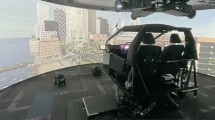
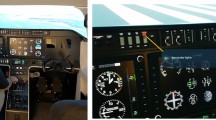
Flight simulators, as a product of the earlier application of system simulation technology, promote the development and upgrading of the simulator industry1. It integrates functional systems such as the simulated cockpit HCI interface, visual system, motion system, control loading system, audio system, computer and network system, control console, and software system2. The HCI interface directly reflects the operational performance of the flight simulator and the driver’s behavioral touchpoints, and its design directly affects the driver’s operating experience. In the current era of intelligent interaction, many flight simulator HCI interface designs remain outdated, which has a certain hindering effect on the cognitive development of drivers’ SA3.

Situation Awareness (SA) describes the relationship among the various factors in the “human-object-environment” and human behavior perception, comprehension, and prediction4. In the scenario of flight simulators, the level of SA is directly related to the design of the HCI interface in the scenario and the driver’s cognition of the situation. The research on SA aims to improve the friendly experience of HCI interfaces in flight simulators. Zhou et al5. analyzed the effect of visual display factors on the driver’s identification performance, and provided a reference for the development of cockpit display interfaces with a high level of SA. Zhang and Zhao6mapped the three-level characteristics of SA to the design and development strategy and constructed a car navigation interface for the driver physiological loading conditions of traffic congestion scenarios. Shu et al7. and Jiang8analyzed the error-prone situations and eye-hand coordination characteristics during flight mission execution and replaced local physical components with touch screen devices to achieve the dual reduction of spatial pressure and driver’s cognitive workload. Ye et al9. focused on the attention allocation strategy in SA theory and verified the optimized design model of the HCI interface layout through quantitative methods such as visual field physiological measurement and weight assignment. Chen10analyzed the driver’s cognitive behavior through interaction scenarios and cognitive resources, and conducted interaction design improvements from a multi-sensory level. Zhu11established a multidimensional cognitive model of the driver based on the cognitive characteristics of interaction behavior in the cockpit during civil aircraft landing scenarios. Liu12optimized the interactive behavior of hydraulic operation HCI interface based on the perceptual characteristics of human eye cone cells. Nguyen et al13. provided a comprehensive overview of existing theoretical models for establishing or enhancing SA, identifying their limitations and suggesting future directions for SA evaluation research. Current advancements in SA studies have addressed the earlier shortcoming of models being confined to theoretical frameworks by integrating experimental data, thereby forging stronger connections with real-world applications. However, current SA research predominantly emphasizes the technical methods and physiological metrics associated with SA models, while insufficient attention has been given to the psychological aspects of “awareness”. This lack of focus on user psychology has resulted in a weaker link between the product and the user experience.

Situation awareness theory

In the context of design research, “situation” refers to the combination of subjective consciousness and objective existence, introducing psychological elements into the consideration of user experience in interface design. “Subjective consciousness” represents the emotions triggered by space and the experience of self-awareness in the follow-up feedback, and “objective existence” represents the interwoven factors in the environment and the mutual relationships of them. Both exist in the interactive system of “human-object-environment”16. “Situation” represents the conditions and environments that people need to produce their behaviors. In psychological definition, “situation” represents the objective working environment, which is special feedback when individuals form physiological and psychological sensations in the environment17. A situation can be briefly divided into the external and internal situation. The former is also known as the environmental situation, which is the influence of objective existence on an individual’s psychology. And the latter is also known as the user situation, which refers to the dynamic psychological state and task goals of individuals when interacting with objects.

Situation awareness model

Since the 1980s, research on SA has developed rapidly. It has been widely used in many fields such as aviation, air traffic control, medicine, and advanced production systems to improve the level of information perception of operators.

Comments

Popular posts from this blog

Drone radar facilitates agricultural monitoring

TVS Motor Sets Up Global Design & Engineering Hub in Italy with Acquisition of Engines Engineering SpA

Japan to increase reliance on nuclear energy